Saturday, 7 May 2011
Conflict with humans
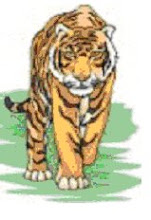
As tigers continue to lose their habitat and prey species, they are increasingly coming into conflict with humans as they attack domestic animals – and sometimes people. In retaliation, tigers are often killed by angry villagers.


Hunting, poaching and illegal trade
For over thousand years, tigers have been hunted as status symbol, decorative item such as wall and floor covering, as souvenirs and curios, and for use in traditional Asian medicines. Hunting for sport probably caused the greatest decline in tiger populations until the 1930s.
In the early 1990s, trade in tiger bone for traditional Chinese medicines threatened to drive tigers to extinction in the wild. Poaching is the largest immediate threat to the remaining tiger population.
In the early 1990s, trade in tiger bone for traditional Chinese medicines threatened to drive tigers to extinction in the wild. Poaching is the largest immediate threat to the remaining tiger population.
Habitat and prey loss

Large-scale habitat destruction and decimation of prey populations are the major long-term threats to the existence of the dwindling tiger population in the country.
Less than a hundred years ago, tigers prowled all across India and the sub-continent. But growing human populations, particularly since the 1940s, have contracted and fragmented the tiger's former range. Although extensive habitat is available in some landscapes, agriculture, clearing of forests for development - especially road networks, hydel projects are forcing tigers into small and scattered islands of remaining habitat. Tigers need large territories. And along with habitat, tigers have also suffered a severe loss of natural prey populations – in particular ungulates such as deer and antelopes.
Wildlife conservation
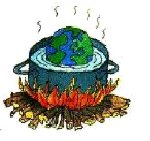
Wildlife conservation is the science of analyzing and protecting the Earth’s biological diversity, which is the variation of life forms within a given ecosystem, or for the entire Earth. Biodiversity on the Earth today consists of many millions of distinct biological species. Wildlife conservation is the process of individuals and organization to protect and preserves these species through conservation education, preservation of habitat and management of fish and wildlife. There are many wildlife conservation societies and organizations that work tirelessly to save wild lands and wildlife through international conservation and education. These groups strive to change attitudes toward nature and to protect natural areas and wild populations of plants and animals, including endangered species. They also work to promote more efficient use of the Earth’s resources and energy to reduce pollution. Environmental preservation, mainly within the United States, is the strict setting aside of natural resources to prevent damage caused by contact with humans or by human activities, such as logging, mining, hunting and fishing. This differs somewhat from conservation in that conservation allows for some degree of industrial development, within sustainable limits. In other parts of the world, preservation and conservation are often used interchangeably.
Subscribe to:
Posts (Atom)