Showing posts with label cow dung.holidays home work reference. Show all posts
Showing posts with label cow dung.holidays home work reference. Show all posts
Thursday, 28 May 2009


Medicines Made Of Cow Dung

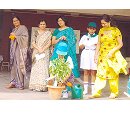
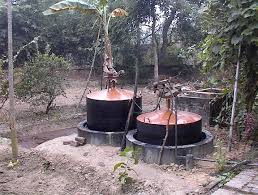
Cow has been a part and parcel of our life since the time immemorial. In Gurukul Cow Shed, cows of high yielding breed are reared and their urine and dung are used for the preparation of so many medicines. All kinds of stomach related disorders are cured through the excreta of cow. Here soaps are also made by using cow urine which are very beneficial in skin related infections


cow-dung is also used to wax the floors in making Kolam ----a form of sandpainting of South India.

Kolam is a form of sandpainting that is drawn using rice powder by female members of the family in front of their home. It is widely practised by Hindus in South India. A Kolam is a sort of painted prayer — a line drawing composed of curved loops, drawn around a grid pattern of dots.
Kolams are thought to bestow prosperity to homes. Every morning in southern India, millions of women draw kolams on the ground with white rice powder. Through the day, the drawings get walked on, rained out, or blown around in the wind; new ones are made the next day. Every morning before sunrise, the floor is cleaned with water, the universal purifier, and the muddy floor is swept well for an even surface. The kolams are generally drawn while the surface is still damp so that it is held better. Occasionally, cow-dung is also used to wax the floors. Cow dung has antiseptic properties and hence provides a literal threshold of protection for the home. It also provides contrast with the white powder.
Decoration was not the sole purpose of a Kolam. In olden days, kolams used to be drawn in coarse rice flour, so that the ants don't have to work so hard for a meal. The rice powder is said to invite birds and other small critters to eat it, thus inviting other beings into one's home and everyday life: a daily tribute to harmonious co-existence. It is a sign of invitation to welcome all into the home, not the least of whom is Goddess Lakshmi, the Goddess of prosperity. The patterns range between geometric and mathematical line drawings around a matrix of dots to free form art work and closed shapes. Folklore has evolved to mandate that the lines must be completed so as to symbolically prevent evil spirits from entering the inside of the shapes, and thus are they prevented from entering the inside of the home.
3x3 dot all and only symmetry 9 Goddesses Swastika Kolam with a single cycle by Nagata S, each of which is corresponded to one of the nine Davi of the Hindu or the nine Muses in GreekIt used to be a matter of pride to be able to draw large complicated patterns without lifting the hand off the floor standing up in between. The month of Margazhi was eagerly awaited by young women, who would then showcase their skills by covering the entire width of the road with one big kolam.
The ritual kolam patterns created for occasions such as weddings can stretch all the way down streets. Patterns are often passed on generation to generation, from mother to daughter.
(from wikipedia)
COWDUNG CAKES
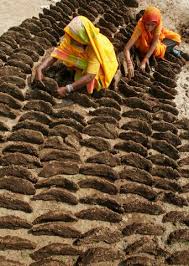
Indian women dry cow dung cakes for use as cooking fuel in Phoolpur village, about 45 kilometers (28 miles) east of Allahabad, India, Sunday, June 8, 2008.
Tuesday, 26 May 2009
Improvement of methanogenesis from cow dung and poultry litter waste digesters by addition of iron
Improvement of methanogenesis from cow dung and poultry litter waste digesters by addition of iron
Journal World Journal of Microbiology and Biotechnology
Publisher Springer Netherlands
When 50mM FeSO4 was added to cow dung and poultry litter waste which had been processed in daily-fed batch digesters, digesters subsequently unfed showed a faster conversion of substrate and overloaded digesters stabilized within 48 h. Early stabilization of digesters was achieved by adding 20 or 50mM FeSO4 though the latter concentration was faster. When 20mM FeSO4 was added to the daily-fed cow dung and poultry litter waste digesters, it increased methanogenesis by 40% and 42%, respectively, and increased the turnover rate of total solids, volatile solids and volatile fatty acids and the number of methanogens.
AUTHORS:-P. Preeti Rao and G. Seenayya
The authors are with the Department of Microbiology, Osmania University, Hyderabad-500007, India
Journal World Journal of Microbiology and Biotechnology
Publisher Springer Netherlands
When 50mM FeSO4 was added to cow dung and poultry litter waste which had been processed in daily-fed batch digesters, digesters subsequently unfed showed a faster conversion of substrate and overloaded digesters stabilized within 48 h. Early stabilization of digesters was achieved by adding 20 or 50mM FeSO4 though the latter concentration was faster. When 20mM FeSO4 was added to the daily-fed cow dung and poultry litter waste digesters, it increased methanogenesis by 40% and 42%, respectively, and increased the turnover rate of total solids, volatile solids and volatile fatty acids and the number of methanogens.
AUTHORS:-P. Preeti Rao and G. Seenayya
The authors are with the Department of Microbiology, Osmania University, Hyderabad-500007, India
Increased production of biogas from cowdung by adding other agricultural waste materials
Increased production of biogas from cowdung by adding other agricultural waste materials
R. D. Laura, M. A. Idnani
Division of Soil Science and Agricultural Chemistry, Indian Agricultural Research Institute, New Delhi, India
Abstract
It was found that the addition of nitrogenous materials, such as casein, urea or urine, increased the extem of decomposition of cowdung, resulting in higher gas production. The effect appears to be due to the maintenance of pH > 7 during fermentation. With the addition of urea or CaCO3, materials such as. dry leaves and cane sugar have yielded high proportions of methane in the gas mixtures and these additions also increased the rate of gas production by promoting anaerobic conditions in the medium. Addition of cellulose also increased the rate but the gas mixture obtained had a lower methane content.
--------------------------------------------------------------------------------
R. D. Laura, M. A. Idnani
Division of Soil Science and Agricultural Chemistry, Indian Agricultural Research Institute, New Delhi, India
Abstract
It was found that the addition of nitrogenous materials, such as casein, urea or urine, increased the extem of decomposition of cowdung, resulting in higher gas production. The effect appears to be due to the maintenance of pH > 7 during fermentation. With the addition of urea or CaCO3, materials such as. dry leaves and cane sugar have yielded high proportions of methane in the gas mixtures and these additions also increased the rate of gas production by promoting anaerobic conditions in the medium. Addition of cellulose also increased the rate but the gas mixture obtained had a lower methane content.
--------------------------------------------------------------------------------
GREEN BRICKS
We’ve covered the value of worm poop, and now it’s time for the merits of cow dung to come to the fore. EcoFaeBrick turns cattle waste into bricks that are greener, stronger and 20% lighter than regular clay bricks.
The Indonesian organization was set up earlier this year to tackle the problem of excessive waste in farming areas. From this, the ecological and economical solution of the Cow Dung Brick was born. There's no visible difference between a traditional brick and the dung brick—and before you ask, there's no smell either. Instead of using wood fire the dung bricks are fired using biogas, helping to further reduce carbon emissions. The new product also lets land be retained for farming, rather than being excavated for clay for conventional bricks, or becoming a health risk due to ‘too much dung’.
A green product that boosts the wealth of rural Indonesians, it's not hard to see why EcoFaeBrick came first in the 2009 Global Social Venture competition. The company has identified 22 areas around Indonesia that they want to expand the project to, plus 22 more in other parts of the world. One to support, or otherwise get involved with!
The Indonesian organization was set up earlier this year to tackle the problem of excessive waste in farming areas. From this, the ecological and economical solution of the Cow Dung Brick was born. There's no visible difference between a traditional brick and the dung brick—and before you ask, there's no smell either. Instead of using wood fire the dung bricks are fired using biogas, helping to further reduce carbon emissions. The new product also lets land be retained for farming, rather than being excavated for clay for conventional bricks, or becoming a health risk due to ‘too much dung’.
A green product that boosts the wealth of rural Indonesians, it's not hard to see why EcoFaeBrick came first in the 2009 Global Social Venture competition. The company has identified 22 areas around Indonesia that they want to expand the project to, plus 22 more in other parts of the world. One to support, or otherwise get involved with!
Wednesday, 6 May 2009
The power of cow dung
A NEWSLETTER FOR YOUR REFERENCE
Siba Mohanty First Published : 08 Nov 2008 01:59:00 AM ISTLast Updated : 11 Nov 2008 01:17:53 AM IST
A silent revolution is taking place in Orissa to reduce greenhouse gas emissions. While policymakers and energy strategists are harping on the need to tap wind, solar, biomass and hydel power to meet the energy needs of India, this eastern state is going back to the good old days when cows provided most of the fuel. Cow power, if one may so describe it, is a demonstration of how traditional technology can be used to generate carbon credits and bring in the euros for end users living in far-flung villages.
Very recently, Orissa entered into a tie-up with a German bank to sell carbon reductions generated through biogas plants in the state. The pact between Orissa Renewable Development Agency (OREDA), the state government’s nodal agency for renewable and non-conventional energy sources, and KfW Bankengruppe will mean that around 11,000 biogas plants stand to gain from certified emission reductions (CER) — carbon credits issued under the clean development mechanism (CDM) — they trade with this foreign bank. Each plant would make about Rs 6,000 worth of CER a year.
This may sound modest when nuclear energy is the flavour of the season across the country. Nonetheless, it makes sense considering that the Union government is struggling to meet the energy needs of rural India. After all, electricity tariffs are slated to rise in the years to come, making power more of a mirage for the average user. Demand for power is so huge that even the 123 Agreement won’t mean much in the long run. Even by government estimates, civil nuclear energy will only produce about 20,000 MW by 2020, which is about 10 per cent of the total power generated in India. Renewable energy is, probably, a more convincing option.
For instance, biogas would not only meet the household energy requirements and enhance livelihood options for villagers; it would also reduce pressure on local forests, as people are so dependent on wood for fuel.
Biogas plants have many benefits. As OREDA chief executive Ajit Bharthuar explains, “The one-time cost of setting up a plant is Rs 9,000. While government gives a subsidy to the tune of Rs 3,000, the rest is borne by the individual. Once the benefits of CDM reach the end user, he/she is likely to get back his investment within a year-and-a-half even after some deduction for maintenance.” As per the OREDA-KfW Bankengruppe pact, the users will enter into an agreement with the state nodal agency to monitor the plants. Users have to pay the maintenance cost of Rs 1,500 a year while OREDA will provide the technical expertise.
But it is not all that easy. Biogas plants have, over the time, witnessed a slow growth — or even a collapsing trend — thanks to prevailing socio-economic conditions in the villages, a drastic change in lifestyle (call it penetration of LPG), technical problems and absence of adequate finances.
A recent survey showed a massive phasing out of the units that are either in operation or degraded due to ineffective use. Of the 64,144 units installed during 2000-2005, only 32,072 plants are in use. About 11,000 plants set up during 2006-08 are in operation. As per the Kyoto Protocol, units installed after 2006 will be eligible for CDM.
“The reason why we incorporated carbon credit scheme for biogas was to modify the gas transmission system and promote continuous use of plants to develop a good environmental integrity in a sustainable manner,” says Bharthuar. About 7,000 plants that add up every year too may come under CDM.
What OREDA is looking at in terms of greenhouse gases reduction — ultimately fetching the users CERs — is pretty impressive. An estimate says it aims at 75,435 tonnes of carbon dioxide in 2009 which will rise to 1,03,497 tonnes of the gas in 2010. In 2018, the amount of reduction would have stood at 1,31,559 tonnes of CO2. Cumulatively, the plants would have reduced a whopping 12,31,403 tonnes of dangerous carbon dioxide from the atmosphere. That’s something to cheer about, for sure.
Carbon trading can be either done through the regulated mode or in the voluntary market. Since the regulated market calls for stringent guidelines that the plant users are unlikely to meet, OREDA has decided to go the voluntary way even though the earnings are less. If a tonne of CER in regulated market fetches about 17 euros, the same in a voluntary market can range between 13 and 4 euros.
OREDA is taking the chance and even hopes to strike the best price available. It is also planning to bring under CDM units that have remained out of operation during 2000-05 through a bundling project. Over 2.2 lakh biogas plants have been set up across Orissa under National Biogas and Manure Management Programme since 1981-82, while the capacity is well over 4 lakh.
A New and Renewable Energy Ministry report says India has generated 12.6 GW of power from renewable resources and plans to generate 20 per cent of its total energy from renewable sources in 12 years. With climate change slated to determine global energy policies in the years to come, renewable sour- ces could just be the order of the day.
Siba Mohanty First Published : 08 Nov 2008 01:59:00 AM ISTLast Updated : 11 Nov 2008 01:17:53 AM IST
A silent revolution is taking place in Orissa to reduce greenhouse gas emissions. While policymakers and energy strategists are harping on the need to tap wind, solar, biomass and hydel power to meet the energy needs of India, this eastern state is going back to the good old days when cows provided most of the fuel. Cow power, if one may so describe it, is a demonstration of how traditional technology can be used to generate carbon credits and bring in the euros for end users living in far-flung villages.
Very recently, Orissa entered into a tie-up with a German bank to sell carbon reductions generated through biogas plants in the state. The pact between Orissa Renewable Development Agency (OREDA), the state government’s nodal agency for renewable and non-conventional energy sources, and KfW Bankengruppe will mean that around 11,000 biogas plants stand to gain from certified emission reductions (CER) — carbon credits issued under the clean development mechanism (CDM) — they trade with this foreign bank. Each plant would make about Rs 6,000 worth of CER a year.
This may sound modest when nuclear energy is the flavour of the season across the country. Nonetheless, it makes sense considering that the Union government is struggling to meet the energy needs of rural India. After all, electricity tariffs are slated to rise in the years to come, making power more of a mirage for the average user. Demand for power is so huge that even the 123 Agreement won’t mean much in the long run. Even by government estimates, civil nuclear energy will only produce about 20,000 MW by 2020, which is about 10 per cent of the total power generated in India. Renewable energy is, probably, a more convincing option.
For instance, biogas would not only meet the household energy requirements and enhance livelihood options for villagers; it would also reduce pressure on local forests, as people are so dependent on wood for fuel.
Biogas plants have many benefits. As OREDA chief executive Ajit Bharthuar explains, “The one-time cost of setting up a plant is Rs 9,000. While government gives a subsidy to the tune of Rs 3,000, the rest is borne by the individual. Once the benefits of CDM reach the end user, he/she is likely to get back his investment within a year-and-a-half even after some deduction for maintenance.” As per the OREDA-KfW Bankengruppe pact, the users will enter into an agreement with the state nodal agency to monitor the plants. Users have to pay the maintenance cost of Rs 1,500 a year while OREDA will provide the technical expertise.
But it is not all that easy. Biogas plants have, over the time, witnessed a slow growth — or even a collapsing trend — thanks to prevailing socio-economic conditions in the villages, a drastic change in lifestyle (call it penetration of LPG), technical problems and absence of adequate finances.
A recent survey showed a massive phasing out of the units that are either in operation or degraded due to ineffective use. Of the 64,144 units installed during 2000-2005, only 32,072 plants are in use. About 11,000 plants set up during 2006-08 are in operation. As per the Kyoto Protocol, units installed after 2006 will be eligible for CDM.
“The reason why we incorporated carbon credit scheme for biogas was to modify the gas transmission system and promote continuous use of plants to develop a good environmental integrity in a sustainable manner,” says Bharthuar. About 7,000 plants that add up every year too may come under CDM.
What OREDA is looking at in terms of greenhouse gases reduction — ultimately fetching the users CERs — is pretty impressive. An estimate says it aims at 75,435 tonnes of carbon dioxide in 2009 which will rise to 1,03,497 tonnes of the gas in 2010. In 2018, the amount of reduction would have stood at 1,31,559 tonnes of CO2. Cumulatively, the plants would have reduced a whopping 12,31,403 tonnes of dangerous carbon dioxide from the atmosphere. That’s something to cheer about, for sure.
Carbon trading can be either done through the regulated mode or in the voluntary market. Since the regulated market calls for stringent guidelines that the plant users are unlikely to meet, OREDA has decided to go the voluntary way even though the earnings are less. If a tonne of CER in regulated market fetches about 17 euros, the same in a voluntary market can range between 13 and 4 euros.
OREDA is taking the chance and even hopes to strike the best price available. It is also planning to bring under CDM units that have remained out of operation during 2000-05 through a bundling project. Over 2.2 lakh biogas plants have been set up across Orissa under National Biogas and Manure Management Programme since 1981-82, while the capacity is well over 4 lakh.
A New and Renewable Energy Ministry report says India has generated 12.6 GW of power from renewable resources and plans to generate 20 per cent of its total energy from renewable sources in 12 years. With climate change slated to determine global energy policies in the years to come, renewable sour- ces could just be the order of the day.

What about BIO GAS ???? from cowdung !!!
Enclose a volume of cow patties and urine add enough water to cover, Stir and stir till you make a creamy mixture. Put on a tight lid with a pipe screwed to the lid some where, attach a hose to the pipe, add a valve, and the other end of the hose going to an inner tube, add warmth and Presto three to fourteen days later the cow pies are magically transformed to BIO GAS. Suitable for cooking, or running a generator (its only half as hot as propane so you need twice as much). Fortunately cows are free with their organic
uses of cow dung
1. Fuel - cow dung patties (gootte) for cooking
2. Fertilizer - composting makes it even more powerful
3. Heat source - cow dung is naturally hot -compost makes hotter put in glass house to heat glass house or run pipes thru it to get hot water.
3. Purifier - natural antiseptic qualities
4. Floor coating - used mixed with mud and water on floors in mud houses. Improves water absorption of mud. Prevents muddy puddles resulting from spilt water.
5. Mud brick additive - improves resistance to disintegration
6. Skin tonic - mixed with crushed neem leaves smeared on skin - good for boils and heat rash (SP used it for heat rash in Mayapur.)
7. Smoke producer - smoldering cow patties keep away mosquitoes. Can also make smoked paneer over such smoke. Tastes great in pasta! :)
Ash - from patties used in cooking. -
8. Pot cleaner - used dry absorbs oil and fat wet as a general cleaner
9. Brass polisher - tamarind removes oxidation - wet ashes polishes
10. Fertilizer - alkaline - cow dung ash is basically lime with a few other mineral mixed in
11. Mud additive - dries up slippery mud puddles
12. Mud brick additive - mud and lime (cow dung ashes) becomes like cement
13. Pond PH balancer - thrown into pond neutralizes acid.
14. Tooth polish -
15. Sun-dried organic recreational-aerodynamic-device -cow patty Frisbees ;)
16. Fan for fire - large cow patties can be used as make shift fans.
17. Deity worship - ingredient in panca gavya
2. Fertilizer - composting makes it even more powerful
3. Heat source - cow dung is naturally hot -compost makes hotter put in glass house to heat glass house or run pipes thru it to get hot water.
3. Purifier - natural antiseptic qualities
4. Floor coating - used mixed with mud and water on floors in mud houses. Improves water absorption of mud. Prevents muddy puddles resulting from spilt water.
5. Mud brick additive - improves resistance to disintegration
6. Skin tonic - mixed with crushed neem leaves smeared on skin - good for boils and heat rash (SP used it for heat rash in Mayapur.)
7. Smoke producer - smoldering cow patties keep away mosquitoes. Can also make smoked paneer over such smoke. Tastes great in pasta! :)
Ash - from patties used in cooking. -
8. Pot cleaner - used dry absorbs oil and fat wet as a general cleaner
9. Brass polisher - tamarind removes oxidation - wet ashes polishes
10. Fertilizer - alkaline - cow dung ash is basically lime with a few other mineral mixed in
11. Mud additive - dries up slippery mud puddles
12. Mud brick additive - mud and lime (cow dung ashes) becomes like cement
13. Pond PH balancer - thrown into pond neutralizes acid.
14. Tooth polish -
15. Sun-dried organic recreational-aerodynamic-device -cow patty Frisbees ;)
16. Fan for fire - large cow patties can be used as make shift fans.
17. Deity worship - ingredient in panca gavya
uses of cow dung
Uses
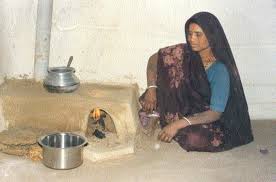
In many parts of the developing world, cow dung is used as a fertilizer and fuel. Caked and dried cow dung is used as a fuel to cook food in many parts of Asia and Africa.
In recent times, the dung is collected and used to produce biogas to generate electricity and heat. The gas is a rich source of methane and is used in rural areas of India and elsewhere to provide a renewable and stable source of electricity.
Cow dung is also used to line the floor and walls of buildings owing to its insect repellent properties. In cold places, cow dung is used to line the walls of rustic houses as a cheap thermal insulator.
It was also used extensively on Indian Railways to seal smokeboxes on steam locomotives.[citation needed]
Cow dung is also an optional ingredient in the manufacture of adobe mud brick housing depending on the availability of materials at hand.[1]
In many parts of the developing world, cow dung is used as a fertilizer and fuel. Caked and dried cow dung is used as a fuel to cook food in many parts of Asia and Africa.
In recent times, the dung is collected and used to produce biogas to generate electricity and heat. The gas is a rich source of methane and is used in rural areas of India and elsewhere to provide a renewable and stable source of electricity.
Cow dung is also used to line the floor and walls of buildings owing to its insect repellent properties. In cold places, cow dung is used to line the walls of rustic houses as a cheap thermal insulator.
It was also used extensively on Indian Railways to seal smokeboxes on steam locomotives.[citation needed]
Cow dung is also an optional ingredient in the manufacture of adobe mud brick housing depending on the availability of materials at hand.[1]
cow dung
Cow dung is the waste of bovine animal species. These species include domestic cattle ("cows"), bison ("buffalo"), yak and water buffalo. Cow dung is the undigested residue of herbivorous matter which has passed through the animal's gut. The resultant faecal matter is rich in minerals. Colour ranges from greenish to blackish, often darkening in colour soon after exposure to air.
Subscribe to:
Posts (Atom)