1. Reduce, Reuse, Recycle
Do your part to reduce waste by choosing reusable products instead of disposables. Buying products with minimal packaging (including the economy size when that makes sense for you) will help to reduce waste.
2. Use Less Heat and Air Conditioning
Adding insulation to your walls and attic, and installing weather stripping or caulking around doors and windows can lower your heating costs more than 25 percent, by reducing the amount of energy you need to heat and cool your home.
3. Change a Light Bulb
Wherever practical, replace regular light bulbs with compact fluorescent light (CFL) bulbs.
4. Drive Less and Drive Smart
Less driving means fewer emissions. Besides saving gasoline, walking and biking are great forms of exercise. Explore your community mass transit system, and check out options for carpooling to work or school.
5. Buy Energy-Efficient Products
When it's time to buy a new car, choose one that offers good gas mileage. Home appliances now come in a range of energy-efficient models, and compact florescent bulbs are designed to provide more natural-looking light while using far less energy than standard light bulbs.
6. Use Less Hot Water
Set your water heater at 120 degrees to save energy, and wrap it in an insulating blanket if it is more than 5 years old. Buy low-flow showerheads to save hot water and about 350 pounds of carbon dioxide yearly.
7. Use the "Off" Switch
Save electricity and reduce global warming by turning off lights when you leave a room, and using only as much light as you need. And remember to turn off your television, video player, stereo and computer when you're not using them.
It's also a good idea to turn off the water when you're not using it. While brushing your teeth, shampooing the dog or washing your car, turn off the water until you actually need it for rinsing. You'll reduce your water bill and help to conserve a vital resource.
8. Plant a Tree
If you have the means to plant a tree, start digging. During photosynthesis, trees and other plants absorb carbon dioxide and give off oxygen. They are an integral part of the natural atmospheric exchange cycle here on Earth, but there are too few of them to fully counter the increases in carbon dioxide caused by automobile traffic, manufacturing and other human activities. A single tree will absorb approximately one ton of carbon dioxide during its lifetime.
9. Get a Report Card from Your Utility Company
Many utility companies provide free home energy audits to help consumers identify areas in their homes that may not be energy efficient. In addition, many utility companies offer rebate programs to help pay for the cost of energy-efficient upgrades.
10. Encourage Others to Conserve
Share information about recycling and energy conservation with your friends, neighbors and co-workers, and take opportunities to encourage public officials to establish programs and policies that are good for the environment.
Showing posts with label global warming. Show all posts
Showing posts with label global warming. Show all posts
Wednesday, 2 June 2010
Fight Global Warming
You Can Help Fight Global Warming
Many efforts are being made by various nations to cut down the rate of global warming. One such effort is the Kyoto agreement that has been made between various nations to reduce the emissions of various green house gases. Also many non profit organizations are working for the cause. Al Gore was one of the foremost U.S. politicians to heave an alarm about the hazards of global warming. He has produced a significantly acclaimed documentary movie called "An Inconvenient Truth," and written a book that archives his advice that Earth is dashing toward an immensely warmer future. Al Gore, the former vice president of United States has given various speeches to raise an awareness of global warming. He has warned people about the ill effects of Global warming and its remedies.
But an interesting side of the global warming episode is that there are people who do not consider global warming as something that is creating a problem. Skeptics of global warming think that global warming is not an ecological trouble. According to the global warming skeptics, the recent enhancement in the earth's average temperature is no reason for alarm. According to them earth's coastlines and polar ice caps are not at a risk of vanishing. Global warming skeptics consider that the weather models used to establish global warming and to forecast its impacts are distorted. According to the models, if calculations are made the last few decades must have been much worse as compared to actually happened to be. Most of the global warming skeptics believe that the global warming is not actually occurring. They stress on the fact the climatic conditions vary because of volcanism, the obliquity cycle, changes in solar output, and internal variability. Also the warming can be due to the variation in cloud cover, which in turn is responsible for the temperatures on the earth. The variations are also a result of cosmic ray flux that is modulated by the solar magnetic cycles.
Many efforts are being made by various nations to cut down the rate of global warming. One such effort is the Kyoto agreement that has been made between various nations to reduce the emissions of various green house gases. Also many non profit organizations are working for the cause. Al Gore was one of the foremost U.S. politicians to heave an alarm about the hazards of global warming. He has produced a significantly acclaimed documentary movie called "An Inconvenient Truth," and written a book that archives his advice that Earth is dashing toward an immensely warmer future. Al Gore, the former vice president of United States has given various speeches to raise an awareness of global warming. He has warned people about the ill effects of Global warming and its remedies.
But an interesting side of the global warming episode is that there are people who do not consider global warming as something that is creating a problem. Skeptics of global warming think that global warming is not an ecological trouble. According to the global warming skeptics, the recent enhancement in the earth's average temperature is no reason for alarm. According to them earth's coastlines and polar ice caps are not at a risk of vanishing. Global warming skeptics consider that the weather models used to establish global warming and to forecast its impacts are distorted. According to the models, if calculations are made the last few decades must have been much worse as compared to actually happened to be. Most of the global warming skeptics believe that the global warming is not actually occurring. They stress on the fact the climatic conditions vary because of volcanism, the obliquity cycle, changes in solar output, and internal variability. Also the warming can be due to the variation in cloud cover, which in turn is responsible for the temperatures on the earth. The variations are also a result of cosmic ray flux that is modulated by the solar magnetic cycles.


cause of global warming
As said, the major cause of global warming is the emission of green house gases like carbon dioxide, methane, nitrous oxide etc into the atmosphere. The major source of carbon dioxide is the power plants. These power plants emit large amounts of carbon dioxide produced from burning of fossil fuels for the purpose of electricity generation. About twenty percent of carbon dioxide emitted in the atmosphere comes from burning of gasoline in the engines of the vehicles. This is true for most of the developed countries. Buildings, both commercial and residential represent a larger source of global warming pollution than cars and trucks.
Building of these structures require a lot of fuel to be burnt which emits a large amount of carbon dioxide in the atmosphere. Methane is more than 20 times as effectual as CO2 at entrapping heat in the atmosphere. Methane is obtained from resources such as rice paddies, bovine flatulence, bacteria in bogs and fossil fuel manufacture. When fields are flooded, anaerobic situation build up and the organic matter in the soil decays, releasing methane to the atmosphere. The main sources of nitrous oxide include nylon and nitric acid production, cars with catalytic converters, the use of fertilizers in agriculture and the burning of organic matter. Another cause of global warming is deforestation that is caused by cutting and burning of forests for the purpose of residence and industrialization.
Building of these structures require a lot of fuel to be burnt which emits a large amount of carbon dioxide in the atmosphere. Methane is more than 20 times as effectual as CO2 at entrapping heat in the atmosphere. Methane is obtained from resources such as rice paddies, bovine flatulence, bacteria in bogs and fossil fuel manufacture. When fields are flooded, anaerobic situation build up and the organic matter in the soil decays, releasing methane to the atmosphere. The main sources of nitrous oxide include nylon and nitric acid production, cars with catalytic converters, the use of fertilizers in agriculture and the burning of organic matter. Another cause of global warming is deforestation that is caused by cutting and burning of forests for the purpose of residence and industrialization.
concept of global warming
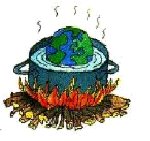
The average facade temperature of the globe has augmented more than 1 degree Fahrenheit since 1900 and the speed of warming has been almost three folds the century long average since 1970. This increase in earth’s average temperature is called Global warming. More or less all specialists studying the climate record of the earth have the same opinion now that human actions, mainly the discharge of green house gases from smokestacks, vehicles, and burning forests, are perhaps the leading power driving the fashion.
The gases append to the planet's normal greenhouse effect, permitting sunlight in, but stopping some of the ensuing heat from radiating back to space. Based on the study on past climate shifts, notes of current situations, and computer simulations, many climate scientists say that lacking of big curbs in greenhouse gas discharges, the 21st century might see temperatures rise of about 3 to 8 degrees, climate patterns piercingly shift, ice sheets contract and seas rise several feet. With the probable exemption of one more world war, a huge asteroid, or a fatal plague, global warming may be the only most danger to our planet earth.
The gases append to the planet's normal greenhouse effect, permitting sunlight in, but stopping some of the ensuing heat from radiating back to space. Based on the study on past climate shifts, notes of current situations, and computer simulations, many climate scientists say that lacking of big curbs in greenhouse gas discharges, the 21st century might see temperatures rise of about 3 to 8 degrees, climate patterns piercingly shift, ice sheets contract and seas rise several feet. With the probable exemption of one more world war, a huge asteroid, or a fatal plague, global warming may be the only most danger to our planet earth.
Monday, 21 December 2009
What did the Copenhagen climate summit achieve?
the Copenhagen conference was a unique moment in history.
What Copenhagen changed:
With 110 world leaders present and a single issue on the agenda, there has never been a meeting like this. The countries that brokered the text, the US, China, India, South Africa, Brazil and the EU, also reflects a world in which the balance of power has significantly changed in the last 20 years.
At a fundamental level, the conference redefined the debate between countries in terms of awareness of climate science and support for action. There is no longer any question that climate change is central to the political thinking of every country on the planet.
Public awareness has also massively increased. The vast campaigns run around the world in the run-up to Copenhagen by governments, NGOs and business and the media coverage of the issue and the summit have made addressing climate change widely understood and discussed from the pubs of rural England to the bars of Beijing.
The other very important change is that green growth is now the prevailing economic model of our time. The idea that addressing climate change is bad for business was buried at Copenhagen. Countries from both developed and developing worlds have announced low-carbon economic plans and are moving forward.
What it did not change:
That combination of political will, economic direction and public pressure was not enough to overcome the concerns over sovereignty that many countries have in the context of international law. The final decision reflects the fact that many countries only want to be answerable to themselves. They will co-operate, but not under the threat of legal sanction.
There is no quantified aggregate target for emissions reduction such as the 50% by 2050 that was in early drafts - as it stands, targets are yet to be announced and they may be at the low end of what was promised, locking in ever greater emissions.
The reference to transparency in the text is significant as it will mean that for the first time actions by countries can be assessed globally, but there is no verification of the actions undertaken in the developing world unless they are paid for by the developed world.
Also, there is very little detail on any of the elements it does mention.
What Copenhagen changed:
With 110 world leaders present and a single issue on the agenda, there has never been a meeting like this. The countries that brokered the text, the US, China, India, South Africa, Brazil and the EU, also reflects a world in which the balance of power has significantly changed in the last 20 years.
At a fundamental level, the conference redefined the debate between countries in terms of awareness of climate science and support for action. There is no longer any question that climate change is central to the political thinking of every country on the planet.
Public awareness has also massively increased. The vast campaigns run around the world in the run-up to Copenhagen by governments, NGOs and business and the media coverage of the issue and the summit have made addressing climate change widely understood and discussed from the pubs of rural England to the bars of Beijing.
The other very important change is that green growth is now the prevailing economic model of our time. The idea that addressing climate change is bad for business was buried at Copenhagen. Countries from both developed and developing worlds have announced low-carbon economic plans and are moving forward.
What it did not change:
That combination of political will, economic direction and public pressure was not enough to overcome the concerns over sovereignty that many countries have in the context of international law. The final decision reflects the fact that many countries only want to be answerable to themselves. They will co-operate, but not under the threat of legal sanction.
There is no quantified aggregate target for emissions reduction such as the 50% by 2050 that was in early drafts - as it stands, targets are yet to be announced and they may be at the low end of what was promised, locking in ever greater emissions.
The reference to transparency in the text is significant as it will mean that for the first time actions by countries can be assessed globally, but there is no verification of the actions undertaken in the developing world unless they are paid for by the developed world.
Also, there is very little detail on any of the elements it does mention.
Thursday, 30 July 2009
Subscribe to:
Posts (Atom)