Showing posts with label Student Activity. Show all posts
Showing posts with label Student Activity. Show all posts
Thursday, 4 February 2010


Thursday, 21 January 2010

Monday, 21 December 2009


Thursday, 29 October 2009
ROLLY POLLY IN KULACHI
WE HAVE BEEN USING A ROLLY POLLY DEVICE IN OUR SCHOOL TO MANAGE WASTE IN THE SCHOOL FOR MAKING BIO-MANURE FOR USING IN THE SCHOOL GARDEN.


Sunday, 10 May 2009

Sunday, 14 December 2008
How energy is measured
One of the basic measuring blocks for energy is called a Btu or British thermal unit. Btu is defined as the amount of heat energy it takes to raise the temperature of 1 pound of water by 1 degree Fahrenheit, at sea level. One Btu equals about one black-tip kitchen match. It takes about 2000 Btu to make a pot of coffee.
Energy can also be measured in joules (pronounced the same way as ‘ jewels’). One joule is the amount of energy needed to lift 1 pound about 9 inches. It takes 1000 joules to equal a Btu. It would take 2 million joules to make a pot of coffee.
Joule is named after an English physicist named James Prescott Joule who lived from 1818 to 1889. He discovered that heat is a type of energy.
Around the world, scientists measure energy in joules rather than Btu. It is much like people around the world using the metric system, metres and kilograms. Like in the metric system, you can have kilojoules: ‘kilo’ means 1000, therefore, 1000 joules = 1 kilojoule = 1 Btu.
Energy can also be measured in joules (pronounced the same way as ‘ jewels’). One joule is the amount of energy needed to lift 1 pound about 9 inches. It takes 1000 joules to equal a Btu. It would take 2 million joules to make a pot of coffee.
Joule is named after an English physicist named James Prescott Joule who lived from 1818 to 1889. He discovered that heat is a type of energy.
Around the world, scientists measure energy in joules rather than Btu. It is much like people around the world using the metric system, metres and kilograms. Like in the metric system, you can have kilojoules: ‘kilo’ means 1000, therefore, 1000 joules = 1 kilojoule = 1 Btu.

Due to the problems associated with the use of fossil fuels, alternative sources of energy have become important and relevant in today’s world. These sources, such as the sun and wind, can never be exhausted and are therefore called renewable. Also known as non-conventional sources of energy, they cause less emission and are available locally. Their use can significantly reduce chemical, radioactive, and thermal pollution. They are viable sources of clean and limitless energy. Most of the renewable sources of energy are fairly non-polluting and considered clean. However, biomass is a major polluter indoors.
Renewable energy sources include the sun, wind, water, agricultural residue, fuelwood, and animal dung. Fossil fuels are non-renewable sources. Energy generated from the sun is known as solar energy. Hydel is the energy derived from water. Biomass – firewood, animal dung, and biodegradable waste from cities and crop residues – is a source of energy when it is burnt. Geothermal energy is derived from hot dry rocks, magma, hot water springs, natural geysers, etc. Ocean thermal is energy derived from waves and also from tidal waves.
Through the method of co-generation a cleaner and less polluting form of energy is being generated. Fuel cells are also being used as cleaner energy source. In India a number of initiatives have been taken. A good example is the model village of Ralegaon Siddhi.
Ralegaon Siddhi, a success story –
In 1975, when Anna Hazare, a retired army man, went back to his village in Ahmednagar district, Maharashtra, he found the village reeling under drought, poverty, debt, and unemployment. He decided to mobilize the people and, with the collective support of all the villagers, he began to introduce changes.
Today Ralegaon Siddhi is being taken as a role model for other villages by the Maharashtra government and by other states too. Massive tree plantation has been undertaken, and hills have been terraced to check erosion. Large canals with ridges on either side have been dug to retain rainwater. As a result, the water table in this area is now considerably higher and the wells and tube wells are never dry, making it possible to raise three crops a year where only one was possible before.
The village's biggest achievement is undoubtedly in the area of non-conventional energy. All the streets in the village are lit by solar lights, each with a separate panel. There are four large community biogas plants and one of them is fitted to the community toilet. There is a large windmill used for pumping water. A number of households have their own biogas plants. The village is self sufficient .
types of energy

The discovery of fire by man led to the possibility of burning wood for cooking and heating thereby using energy. For several thousand years human energy demands were met only by renewable energy sources—sun, biomass (wood, leaves, twigs), hydel (water) and wind power.
As early as 4000–3500 BC, the first sailing ships and windmills were developed harnessing wind energy. With the use of hydropower through water mills or irrigation systems, things began to move faster. Fuelwood and dung cakes are even today a major source of energy in rural India. Solar energy is used for drying and heating.
With the advent of the Industrial Revolution, the use of energy in the form of fossil fuels began growing as more and more industries were set up. This occurred in stages, from the exploitation of coal deposits to the exploitation of oil and natural gas fields. It has been only half a century since nuclear power began being used as an energy source. In the past century, it became evident that the consumption of non-renewable sources of energy had caused more environmental damage than any other human activity. Electricity generated from fossil fuels such as coal and crude oil has led to high concentrations of harmful gases in the atmosphere. This has in turn led to problems such as ozone depletion and global warming. Vehicular pollution is also a grave problem.
There has been an enormous increase in the demand for energy since the middle of the last century as a result of industrial development and population growth. World population grew 3.2 times between 1850 and 1970, per capita use of industrial energy increased about twentyfold, and total world use of industrial and traditional energy forms combined increased more than twelvefold.

ENERGY
Can you imagine life without lights, fans, cars, computers and television, or of fetching water from the well and river? This is what life would have been like had man not discovered the uses of energy – both renewable and nonrenewable sources.
What is energy ?
Energy lights our cities, powers our vehicles, and runs machinery in factories. It warms and cools our homes, cooks our food, plays our music, and gives us pictures on television.
Energy is defined as the ability or the capacity to do work.
We use energy to do work and make all movements. When we eat, our bodies transform the food into energy to do work. When we run or walk or do some work, we ‘burn’ energy in our bodies. Cars, planes, trolleys, boats, and machinery also transform energy into work. Work means moving or lifting something, warming or lighting something. There are many sources of energy that help to run the various machines invented by man.
What is energy ?
Energy lights our cities, powers our vehicles, and runs machinery in factories. It warms and cools our homes, cooks our food, plays our music, and gives us pictures on television.
Energy is defined as the ability or the capacity to do work.
We use energy to do work and make all movements. When we eat, our bodies transform the food into energy to do work. When we run or walk or do some work, we ‘burn’ energy in our bodies. Cars, planes, trolleys, boats, and machinery also transform energy into work. Work means moving or lifting something, warming or lighting something. There are many sources of energy that help to run the various machines invented by man.
Quiz time
Statement
A book falls off a table and free falls to the ground.
Answer with Explanation
Yes.
This is an example of work. There is a force (gravity) which acts on the book which causes it to be displaced in a downward direction (i.e., "fall").
A book falls off a table and free falls to the ground.
Answer with Explanation
Yes.
This is an example of work. There is a force (gravity) which acts on the book which causes it to be displaced in a downward direction (i.e., "fall").
work ......concept
When a force acts upon an object to cause a displacement of the object, it is said that work was done upon the object. There are three key ingredients to work - force, displacement, and cause. In order for a force to qualify as having done work on an object, there must be a displacement and the force must cause the displacement. There are several good examples of work which can be observed in everyday life - a horse pulling a plow through the field, a father pushing a grocery cart down the aisle of a grocery store, a freshman lifting a backpack full of books upon her shoulder, a weightlifter lifting a barbell above his head, an Olympian launching the shot-put, etc. In each case described here there is a force exerted upon an object to cause that object to be displaced.
Wednesday, 3 December 2008



Saturday, 29 November 2008
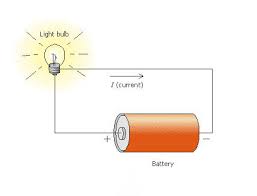
electricity
The three fundamental particles comprising most atoms are called protons, neutrons and electrons. Whilst the majority of atoms have a combination of protons, neutrons, and electrons, not all atoms have neutrons; an example is the protium isotope (1H1) of hydrogen (Hydrogen-1) which is the lightest and most common form of hydrogen which only has one proton and one electron. Atoms are far too small to be seen, but if we could look at one, it might appear something like this:
Even though each atom in a piece of material tends to hold together as a unit, there's actually a lot of empty space between the electrons and the cluster of protons and neutrons residing in the middle.
This crude model is that of the element carbon, with six protons, six neutrons, and six electrons. In any atom, the protons and neutrons are very tightly bound together, which is an important quality. The tightly-bound clump of protons and neutrons in the center of the atom is called the nucleus, and the number of protons in an atom's nucleus determines its elemental identity: change the number of protons in an atom's nucleus, and you change the type of atom that it is. In fact, if you could remove three protons from the nucleus of an atom of lead, you will have achieved the old alchemists' dream of producing an atom of gold! The tight binding of protons in the nucleus is responsible for the stable identity of chemical elements, and the failure of alchemists to achieve their dream.
Neutrons are much less influential on the chemical character and identity of an atom than protons, although they are just as hard to add to or remove from the nucleus, being so tightly bound. If neutrons are added or gained, the atom will still retain the same chemical identity, but its mass will change slightly and it may acquire strange nuclear properties such as radioactivity.
However, electrons have significantly more freedom to move around in an atom than either protons or neutrons. In fact, they can be knocked out of their respective positions (even leaving the atom entirely!) by far less energy than what it takes to dislodge particles in the nucleus. If this happens, the atom still retains its chemical identity, but an important imbalance occurs. Electrons and protons are unique in the fact that they are attracted to one another over a distance. It is this attraction over distance which causes the attraction between rubbed objects, where electrons are moved away from their original atoms to reside around atoms of another object.
Electrons tend to repel other electrons over a distance, as do protons with other protons. The only reason protons bind together in the nucleus of an atom is because of a much stronger force called the strong nuclear force which has effect only under very short distances. Because of this attraction/repulsion behavior between individual particles, electrons and protons are said to have opposite electric charges. That is, each electron has a negative charge, and each proton a positive charge. In equal numbers within an atom, they counteract each other's presence so that the net charge within the atom is zero. This is why the picture of a carbon atom had six electrons: to balance out the electric charge of the six protons in the nucleus. If electrons leave or extra electrons arrive, the atom's net electric charge will be imbalanced, leaving the atom "charged" as a whole, causing it to interact with charged particles and other charged atoms nearby. Neutrons are neither attracted to or repelled by electrons, protons, or even other neutrons, and are consequently categorized as having no charge at all.
The process of electrons arriving or leaving is exactly what happens when certain combinations of materials are rubbed together: electrons from the atoms of one material are forced by the rubbing to leave their respective atoms and transfer over to the atoms of the other material. In other words, electrons comprise the "fluid" hypothesized by Benjamin Franklin. The operational definition of a coulomb as the unit of electrical charge (in terms of force generated between point charges) was found to be equal to an excess or deficiency of about 6,250,000,000,000,000,000 electrons. Or, stated in reverse terms, one electron has a charge of about 0.00000000000000000016 coulombs. Being that one electron is the smallest known carrier of electric charge, this last figure of charge for the electron is defined as the elementary charge.
The result of an imbalance of this "fluid" (electrons) between objects is called static electricity. It is called "static" because the displaced electrons tend to remain stationary after being moved from one insulating material to another. In the case of wax and wool, it was determined through further experimentation that electrons in the wool actually transferred to the atoms in the wax, which is exactly opposite of Franklin's conjecture! In honor of Franklin's designation of the wax's charge being "negative" and the wool's charge being "positive," electrons are said to have a "negative" charging influence. Thus, an object whose atoms have received a surplus of electrons is said to be negatively charged, while an object whose atoms are lacking electrons is said to be positively charged, as confusing as these designations may seem. By the time the true nature of electric "fluid" was discovered, Franklin's nomenclature of electric charge was too well established to be easily changed, and so it remains to this day.
Michael Faraday proved (1832) that static electricity was the same as that produced by a battery or a generator. Static electricity is, for the most part, a nusiance. Black powder and smokeless powder have graphite added to prevent ignition due to static electricity. It causes damage to sensitive semiconductor circuitry. While is is possible to produce motors powered by high voltage and low current characteristic of static electricity, this is not economic. The few practical applications of static electricity include xerographic printing, the electrostatic air filter, and the high voltage Van de Graaff generator.
Even though each atom in a piece of material tends to hold together as a unit, there's actually a lot of empty space between the electrons and the cluster of protons and neutrons residing in the middle.
This crude model is that of the element carbon, with six protons, six neutrons, and six electrons. In any atom, the protons and neutrons are very tightly bound together, which is an important quality. The tightly-bound clump of protons and neutrons in the center of the atom is called the nucleus, and the number of protons in an atom's nucleus determines its elemental identity: change the number of protons in an atom's nucleus, and you change the type of atom that it is. In fact, if you could remove three protons from the nucleus of an atom of lead, you will have achieved the old alchemists' dream of producing an atom of gold! The tight binding of protons in the nucleus is responsible for the stable identity of chemical elements, and the failure of alchemists to achieve their dream.
Neutrons are much less influential on the chemical character and identity of an atom than protons, although they are just as hard to add to or remove from the nucleus, being so tightly bound. If neutrons are added or gained, the atom will still retain the same chemical identity, but its mass will change slightly and it may acquire strange nuclear properties such as radioactivity.
However, electrons have significantly more freedom to move around in an atom than either protons or neutrons. In fact, they can be knocked out of their respective positions (even leaving the atom entirely!) by far less energy than what it takes to dislodge particles in the nucleus. If this happens, the atom still retains its chemical identity, but an important imbalance occurs. Electrons and protons are unique in the fact that they are attracted to one another over a distance. It is this attraction over distance which causes the attraction between rubbed objects, where electrons are moved away from their original atoms to reside around atoms of another object.
Electrons tend to repel other electrons over a distance, as do protons with other protons. The only reason protons bind together in the nucleus of an atom is because of a much stronger force called the strong nuclear force which has effect only under very short distances. Because of this attraction/repulsion behavior between individual particles, electrons and protons are said to have opposite electric charges. That is, each electron has a negative charge, and each proton a positive charge. In equal numbers within an atom, they counteract each other's presence so that the net charge within the atom is zero. This is why the picture of a carbon atom had six electrons: to balance out the electric charge of the six protons in the nucleus. If electrons leave or extra electrons arrive, the atom's net electric charge will be imbalanced, leaving the atom "charged" as a whole, causing it to interact with charged particles and other charged atoms nearby. Neutrons are neither attracted to or repelled by electrons, protons, or even other neutrons, and are consequently categorized as having no charge at all.
The process of electrons arriving or leaving is exactly what happens when certain combinations of materials are rubbed together: electrons from the atoms of one material are forced by the rubbing to leave their respective atoms and transfer over to the atoms of the other material. In other words, electrons comprise the "fluid" hypothesized by Benjamin Franklin. The operational definition of a coulomb as the unit of electrical charge (in terms of force generated between point charges) was found to be equal to an excess or deficiency of about 6,250,000,000,000,000,000 electrons. Or, stated in reverse terms, one electron has a charge of about 0.00000000000000000016 coulombs. Being that one electron is the smallest known carrier of electric charge, this last figure of charge for the electron is defined as the elementary charge.
The result of an imbalance of this "fluid" (electrons) between objects is called static electricity. It is called "static" because the displaced electrons tend to remain stationary after being moved from one insulating material to another. In the case of wax and wool, it was determined through further experimentation that electrons in the wool actually transferred to the atoms in the wax, which is exactly opposite of Franklin's conjecture! In honor of Franklin's designation of the wax's charge being "negative" and the wool's charge being "positive," electrons are said to have a "negative" charging influence. Thus, an object whose atoms have received a surplus of electrons is said to be negatively charged, while an object whose atoms are lacking electrons is said to be positively charged, as confusing as these designations may seem. By the time the true nature of electric "fluid" was discovered, Franklin's nomenclature of electric charge was too well established to be easily changed, and so it remains to this day.
Michael Faraday proved (1832) that static electricity was the same as that produced by a battery or a generator. Static electricity is, for the most part, a nusiance. Black powder and smokeless powder have graphite added to prevent ignition due to static electricity. It causes damage to sensitive semiconductor circuitry. While is is possible to produce motors powered by high voltage and low current characteristic of static electricity, this is not economic. The few practical applications of static electricity include xerographic printing, the electrostatic air filter, and the high voltage Van de Graaff generator.
Subscribe to:
Posts (Atom)